Shiba guide
Living with a Shiba
We have lived with and studied Shibas since the 1980s, starting with a visit to Japan. This guide shares what we have learned, so your Shiba's first months with you go well.
A primitive breed
Shibas are one of the breeds genetically closest to the wolf. They are highly intelligent, and that intelligence is tied to a strong survival instinct. A Shiba sizes people up very quickly, but sizing you up is not the same as accepting you. Your Shiba will decide whether to welcome you into its life.
Shibas are also stoic. They often hide stress, so a calm-looking Shiba may still be struggling inside. And they remember. A Shiba that is hit or treated harshly may never trust that person again.
Young Shibas (under 3)
Think of a young Shiba as a teenager: testing limits and trying everything. Some are overconfident and some are very timid, and both kinds need help building real confidence. A new home is stressful, even when they don't show it.
The first weeks: let the Shiba come to you
- The first two weeks are often a honeymoon period. A young Shiba may be on its best behavior while it quietly watches and learns about you.
- Don't go to your Shiba to pet it. Let it approach you.
- When your Shiba comes over and sits near you on its own, give a short pat and some quiet praise. Keep it brief.
- Moving into a Shiba's space too fast can make it retreat, or nip. That nip means "I need space; I'll tell you when I'm ready."
- We strongly suggest your new Shiba wear its harness day and night for the first week or two, so there is less handling to take it on and off, and that the leash stays attached in the house during this adjustment time.
- Older Shibas can take weeks, months or even a year to settle, especially if they were mistreated, were devoted to one person, or were poorly socialized.
Treats
- Use treats sparingly. You can't win a Shiba over with food the way you can with many breeds, and they quickly come to expect them.
- Skip high-value chews a dog can possess and guard, like elk bones, yak or antler chews, and parts of prey animals. These can trigger possessive behavior and biting.
- Choose small edible treats that are eaten in a few seconds. Whole carrots make a satisfying treat.
A space of their own
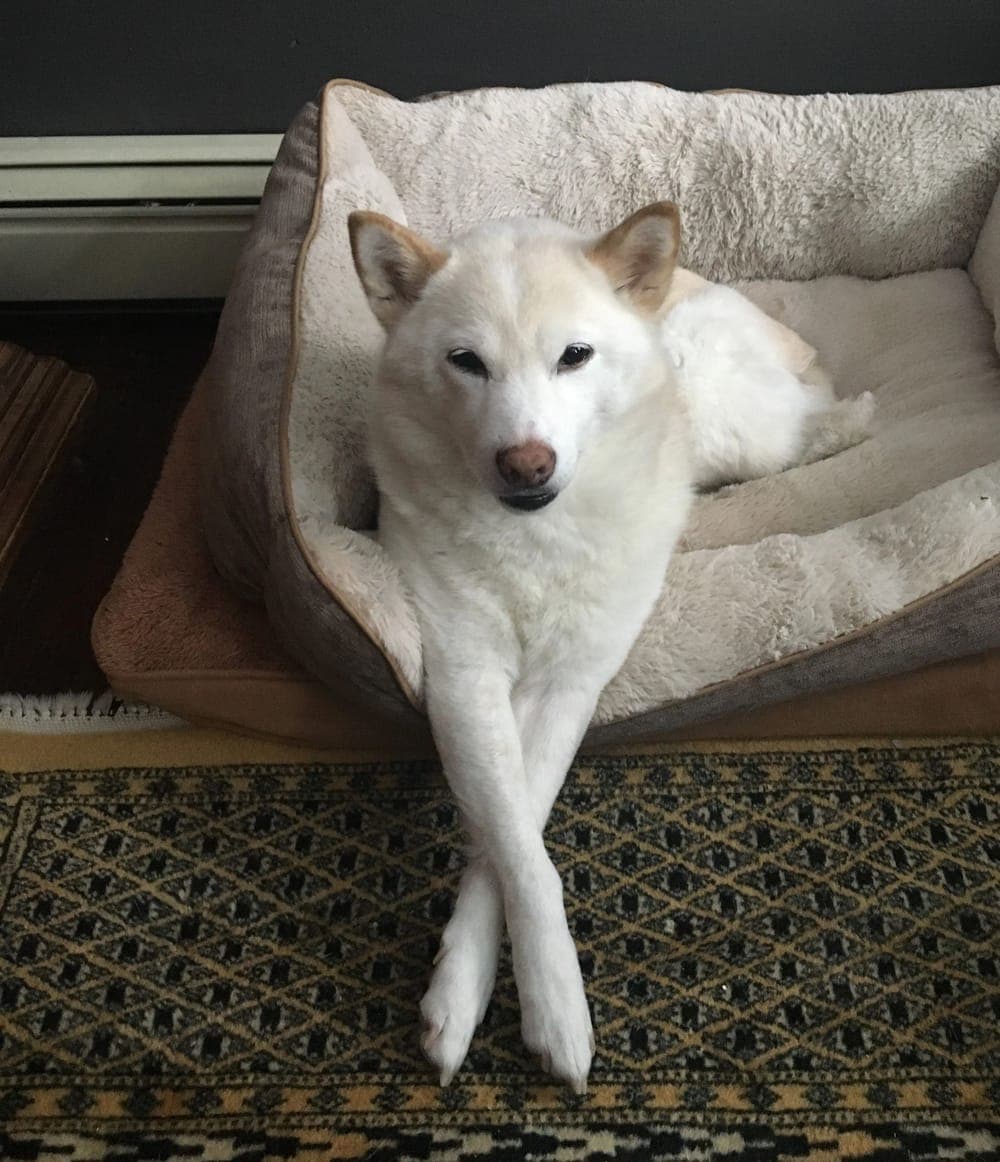
- Give your Shiba its own spot: a corner, a dog bed or a special chair.
- Leave the Shiba alone in its spot until it knows and trusts you.
- Don't invite a young Shiba onto your bed right away. It may decide the bed is its territory, which makes you the intruder. You can revisit this later.
Safety: escape artists
- Never leave a Shiba outside unsupervised. They will escape to chase squirrels and other small animals.
- Never tie out a Shiba. They can chew through a tether to get free.
- Shibas should not be off leash outside a securely fenced area. Their prey drive beats their recall.